

The Spark of Ingenuity: Electricity’s Journey from Discovery to a Sustainable Future
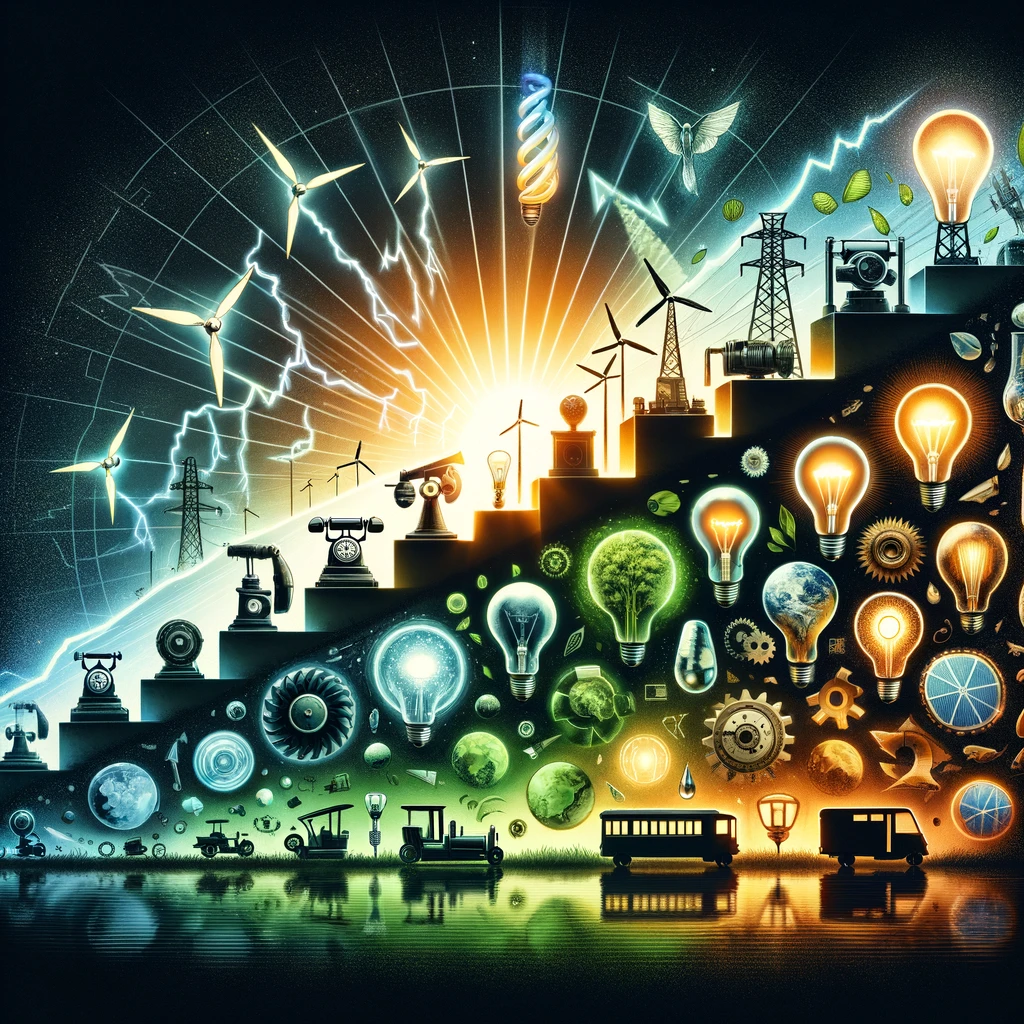
The story of electricity is a fascinating journey from mystical curiosity to the backbone of modern civilization, encapsulating centuries of human ingenuity and the relentless pursuit of progress. From the early days of its discovery to the present and peering into the future, electricity’s evolution is not just a tale of technological advancement but also of humanity’s growing consciousness towards more sustainable and responsible energy consumption.
The discovery of electricity can be traced back to ancient civilizations, where it was regarded with awe and mysticism. However, it wasn’t until the 17th and 18th centuries that significant progress was made in understanding and harnessing this force. Pioneers like Benjamin Franklin with his kite experiment and Michael Faraday’s invention of the electric generator laid the groundwork for the first practical uses of electricity.
The late 19th century saw the dawn of the electric age. Thomas Edison’s incandescent light bulb and Nikola Tesla’s development of alternating current (AC) power transmission illuminated the possibilities of electric power, leading to the establishment of the first power stations. These early generators were primarily coal-fired, contributing to the industrial era’s burgeoning energy demands but also to its environmental costs.
As the 20th century progressed, electricity generation became more efficient and diversified. Hydroelectric power plants, such as the iconic Hoover Dam, began to harness the energy of flowing water, providing a cleaner alternative to coal. Despite these advancements, fossil fuels remained the dominant source of electricity, with oil and natural gas joining coal to meet the world’s ever-growing energy needs.
The late 20th and early 21st centuries marked a pivotal shift in the narrative of electricity generation. The growing awareness of climate change and the environmental impact of carbon emissions from fossil fuel consumption prompted a global rethinking of energy production. Renewable energy sources, such as wind and solar power, emerged not just as viable alternatives but as necessary steps towards a sustainable future.
Today, the landscape of electricity generation is undergoing a rapid transformation. Innovations in solar and wind technology, alongside advancements in battery storage, are making renewable energy more accessible and affordable than ever before. Countries around the world are setting ambitious targets to reduce carbon emissions, with electricity generation at the forefront of this global effort.
Looking to the future, the potential for further innovations in electricity generation and consumption is boundless. The concept of smart grids, which use digital technology to optimize the production and distribution of electricity, promises to make energy systems more efficient, reliable, and sustainable. Additionally, the exploration of new energy sources, such as fusion power, holds the promise of providing clean, virtually limitless energy.
As we move forward, the challenge will be not only to continue advancing technology but also to ensure that the benefits of electricity are accessible to all, reducing inequality and fostering a more sustainable world. The journey of electricity, from its early days to the dawn of a greener future, is a testament to human creativity and resilience. It is a story that continues to unfold, with each chapter bringing us closer to a more sustainable and electrified world.


