

The Future of Air Travel: Soaring Towards Sustainability
The notion of air travel has long been synonymous with notions of adventure, exploration, and the thrill of connecting distant corners of the globe. Yet, as our collective consciousness shifts towards a more sustainable future, the aviation industry stands at a crossroads, challenged to reinvent itself in the face of climate change. The future of air travel, marked by innovative technologies and sustainable practices, promises not only to reduce carbon emissions but also to transform the flying experience for passengers worldwide.
The aviation sector is a significant contributor to global carbon emissions, accounting for approximately 2-3% of the total. This figure, though seemingly small, has a substantial impact on the planet’s climate system. As awareness of climate change has grown, so has the scrutiny on the ways in which we travel. The industry’s response? A multifaceted approach that encompasses advancements in aircraft technology, airport operations, and the broader infrastructure supporting air travel.
One of the most promising developments in the quest for greener skies is the advent of electric aircraft. Companies around the globe are racing to develop planes powered by electricity, aiming to launch them for commercial use within the next decade. These electric planes, which emit zero carbon during flight, represent a revolutionary step forward. They’re expected to be initially suited for shorter routes, serving as a sustainable alternative for regional travel. Moreover, the push towards electrification is complemented by ongoing research into alternative fuels, such as sustainable aviation fuel (SAF), which can reduce greenhouse gas emissions by up to 80% compared to conventional jet fuel when used in blended form.
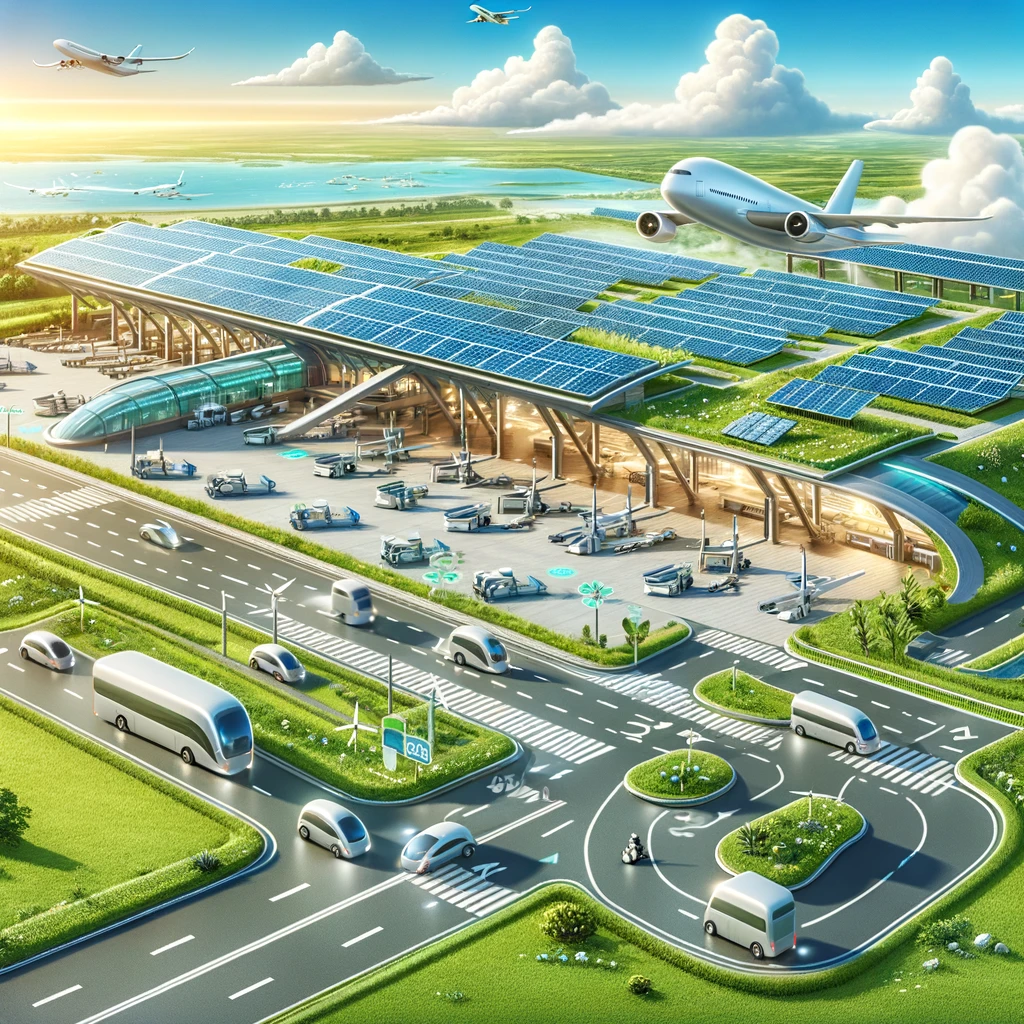
The transformation extends beyond the aircraft themselves. Airports, the critical nodes in the aviation network, are undergoing a green makeover. Futuristic designs envision airports powered entirely by renewable energy sources, with solar panels and wind turbines integrated into their infrastructure. Green roofs and water recycling systems are being implemented to reduce airports’ environmental footprints. These hubs are set to become models of sustainability, showcasing how large-scale operations can effectively minimize their impact on the environment.
In addition to technological advancements, the future of air travel will likely see changes in the way flights are managed. Innovations in air traffic management systems are aimed at optimizing flight paths, reducing unnecessary fuel consumption, and minimizing delays. This smarter approach to flight management will not only contribute to reducing emissions but also improve the overall efficiency of air travel, potentially leading to shorter travel times and reduced costs for airlines and passengers alike.
However, achieving a sustainable future for air travel requires a collective effort. Governments, industry stakeholders, and consumers all play crucial roles. Policy incentives that encourage investment in clean technologies, along with international collaboration to set and meet emission reduction targets, are essential. Meanwhile, passengers can contribute by making conscious travel choices, such as opting for direct flights, choosing airlines that prioritize sustainability, or even considering alternative modes of transport for shorter distances.
The path to sustainable air travel is undoubtedly complex, filled with technological, regulatory, and economic challenges. Yet, the journey is imperative. As we look to the skies, the vision of a future where air travel harmonizes with our environmental aspirations is not only inspiring but increasingly within reach. Through innovation and commitment, the aviation industry is poised to take significant strides toward a cleaner, greener future, ensuring that the joy of flying is shared by generations to come.


