

The Enduring Legacy of Victorian Innovations: From Sewers to Stamps
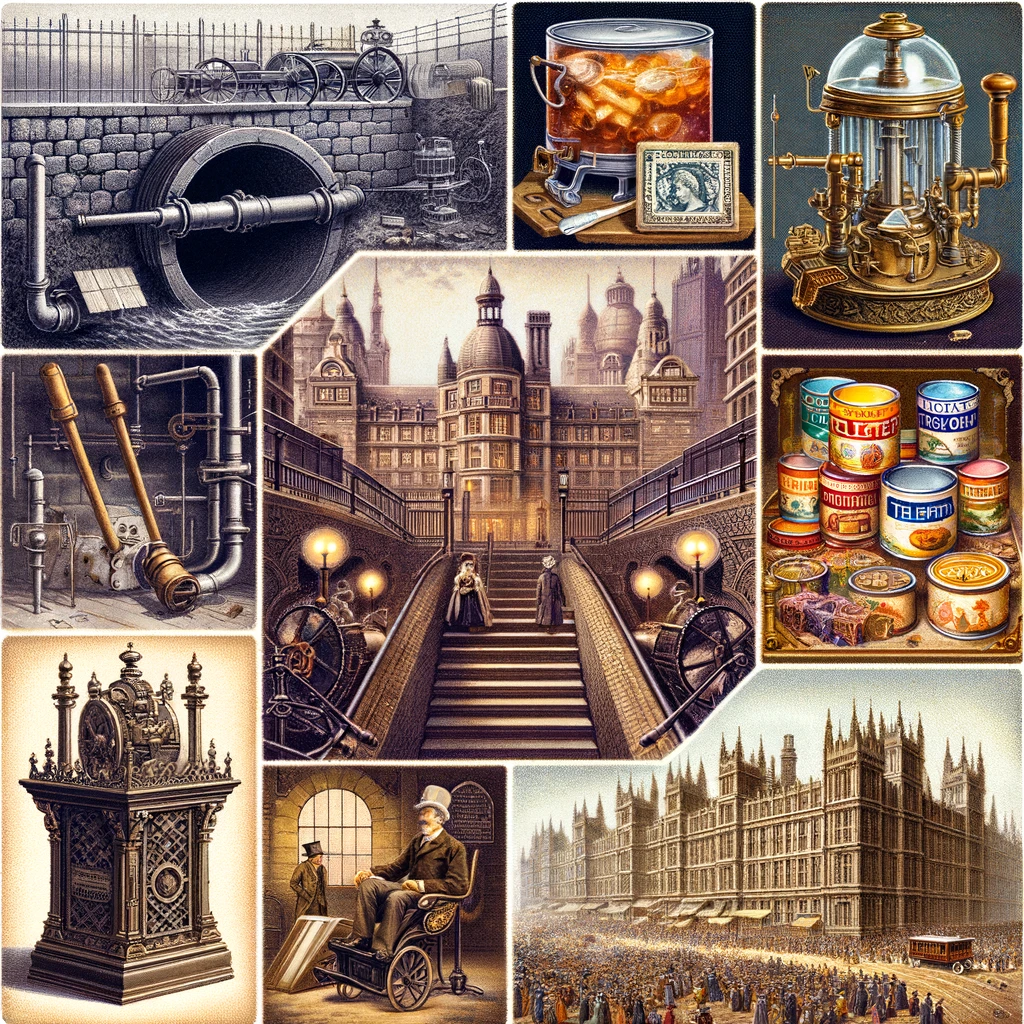
The Victorian era, spanning from 1837 to 1901 under the reign of Queen Victoria, was a period of monumental progress and innovation that reshaped the world in countless ways. While the epoch is commonly celebrated for its architectural marvels, the Industrial Revolution, and the expansion of the British Empire, there are a myriad of lesser-known discoveries and inventions from this time that continue to influence our daily lives. From the foods we consume to the way we communicate, the Victorian influence is both pervasive and enduring.
One of the most impactful, yet often overlooked, Victorian innovations is the sewage system. Before the advent of modern sewage management, cities were plagued by diseases such as cholera and typhoid, largely due to inadequate waste disposal methods. Joseph Bazalgette’s engineering prowess gave birth to London’s modern sewer network, a groundbreaking project that dramatically improved public health and became a model for cities worldwide. This hidden labyrinth beneath our feet is a testament to Victorian ingenuity, ensuring our urban centres remain liveable and hygienic.
The Victorians were also responsible for revolutionising the way we eat. The invention of canning, albeit in its infancy, transformed food preservation and distribution. Peter Durand’s 1810 patent for preserving food in tin cans marked the beginning of the global food industry, enabling longer shelf lives and making a variety of foods accessible year-round. Today, canned goods are a staple in pantries worldwide, illustrating the lasting impact of this Victorian innovation on our eating habits.
In the realm of communication, the Victorian era was a time of extraordinary advancements. The electric telegraph, perfected by Sir William Fothergill Cooke and Charles Wheatstone, laid the groundwork for instant long-distance communication. By allowing messages to be transmitted over vast distances in a matter of minutes, the telegraph not only revolutionised personal communication but also transformed commerce, journalism, and military strategy. Its legacy lives on in the digital age, with the internet and email serving as the modern conduits for instant communication across the globe.
Another Victorian invention that has seamlessly integrated into our daily lives is the postage stamp. Before Sir Rowland Hill introduced the Penny Black in 1840, the cost of sending mail was prohibitively expensive and based on distance and the number of pages sent. Hill’s reform, which included the prepaid, adhesive postage stamp, made postal services affordable and accessible to the masses. This innovation not only democratized communication but also laid the foundation for the global postal systems we rely on today.
Furthermore, the Victorians played a crucial role in the development of public parks and recreational spaces. Prior to this era, green spaces within cities were scarce and primarily reserved for the wealthy. The establishment of public parks, such as the opening of Birkenhead Park in 1847, signified a shift towards creating healthier urban environments and promoting well-being among the populace. This concept of accessible green spaces is a cornerstone of modern urban planning, highlighting the Victorian era’s lasting contribution to our quality of life.
As we navigate our modern world, the Victorian era’s legacy is evident in aspects of life we often take for granted. From the sewers that keep our cities clean to the cans in our cupboards and the stamps on our mail, Victorian ingenuity has paved the way for innovations that shape our everyday experiences. The Victorian era, therefore, stands not only as a testament to human creativity and progress but also as a reminder of the profound impact that past innovations can have on future generations.


