

Traversing Time: The Evolution of the United Kingdom’s Road Network
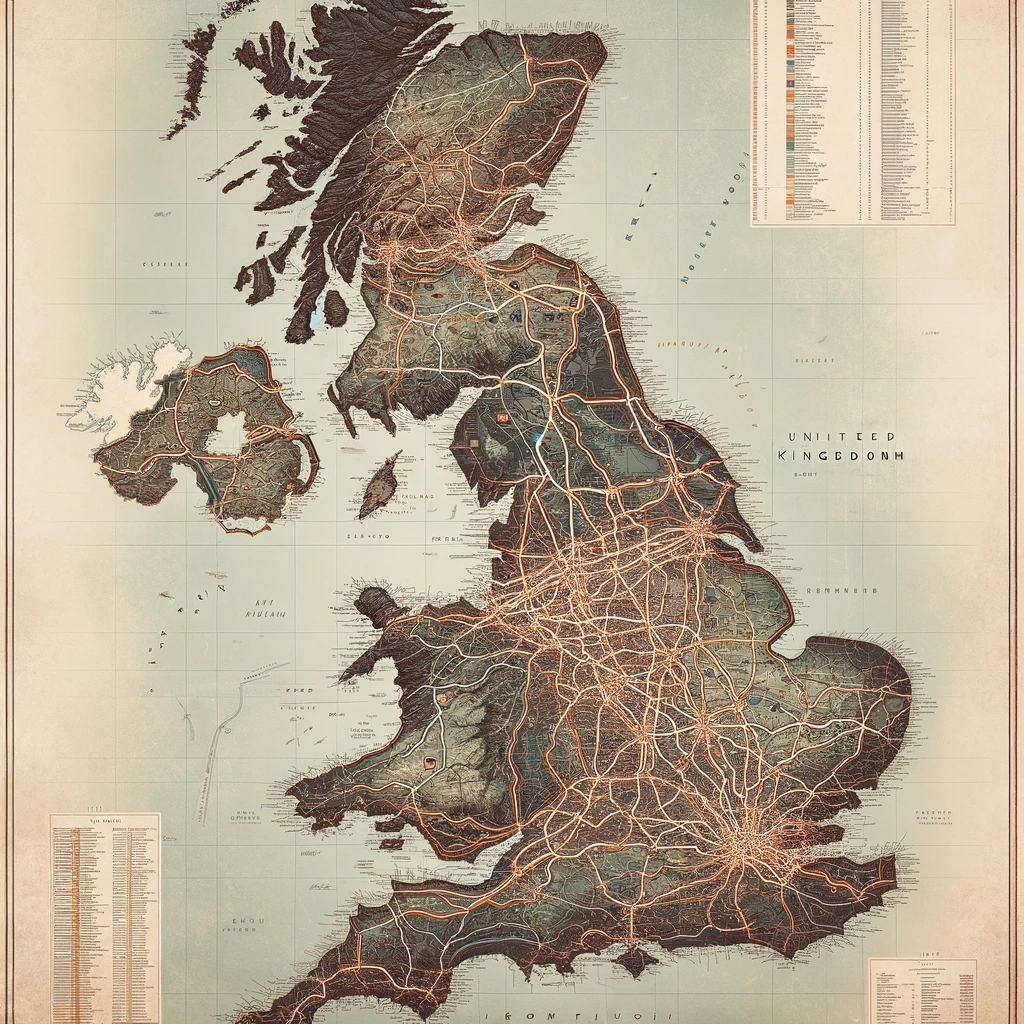
The United Kingdom’s road network is a tapestry woven through centuries, marking the progression from simple Roman roads to the intricate web of motorways and A-roads that connect every corner of the country today. This network is not merely a means of transportation; it’s a reflection of the UK’s historical, economic, and social evolution.
The story begins in the Roman era, when the first major roads were constructed to facilitate the movement of troops and communication across the expansive Roman Empire. These roads, built with remarkable engineering precision, laid down the foundation of Britain’s road network. The remnants of roads like Watling Street, which connected Dover to Wroxeter, and the Fosse Way, stretching from Exeter to Lincoln, still serve as vital arteries in today’s road system.
Following the collapse of Roman Britain, the maintenance of these roads fell into neglect. It wasn’t until the medieval period that significant road construction efforts resumed, albeit at a modest scale, primarily focusing on local connectivity. The roads of this era were rudimentary, often no more than dirt tracks that became impassable mud in wet weather. Travel was slow and perilous, undertaken only out of necessity.
The advent of the stagecoach in the 17th century catalyzed improvements in road conditions. The Turnpike Trusts, established from the early 18th century, were empowered to collect tolls and use these funds to repair and maintain roads. This period saw the introduction of milestones and later, cast-iron road signs, which provided travelers with much-needed navigational aids.
However, it was the Industrial Revolution that truly transformed the UK’s road network. The increased movement of goods and people necessitated a more reliable infrastructure. The turnpike roads were progressively paved, and new routes were established to connect the burgeoning industrial towns. Notably, engineers like John McAdam and Thomas Telford pioneered techniques in road construction that significantly improved durability and efficiency.
The 20th century heralded the era of the motor vehicle, reshaping the road network once again. The introduction of the Motor Car Act 1903, which required registration of vehicles and driving licenses, marked the beginning of modern road regulation. The need to accommodate the rapidly increasing number of cars led to the development of the UK’s motorway system in the late 1950s, with the Preston By-pass, now part of the M6, becoming the first stretch of motorway.
This expansion continued through the second half of the 20th century, with the construction of major motorways like the M1, connecting London to Leeds, and the M25, London’s orbital motorway. These developments not only facilitated regional connectivity but also played a crucial role in economic growth, enabling more efficient movement of goods and people across the country.
Today, the UK’s road network comprises over 246,000 miles of roads, from scenic A-roads that traverse the countryside to the sprawling motorways that underpin the nation’s economy. The maintenance and expansion of this network are ongoing challenges, balancing the need for connectivity with environmental and community concerns.
The future of the UK’s road network looks towards sustainable development, with increasing emphasis on reducing carbon emissions and accommodating alternative modes of transport. The introduction of smart motorway technology, aiming to increase capacity and efficiency without the need for physical expansion, represents a shift towards a more integrated and intelligent transport system.
As we traverse the roads of the United Kingdom, we travel not just across distances but through time, tracing the lines of history laid down over centuries. The road network, a testament to human endeavor and engineering prowess, continues to evolve, adapting to the needs of a changing society.


