Why Have Cartoons for Adults Like South Park and Family Guy Become So Enduringly Popular?
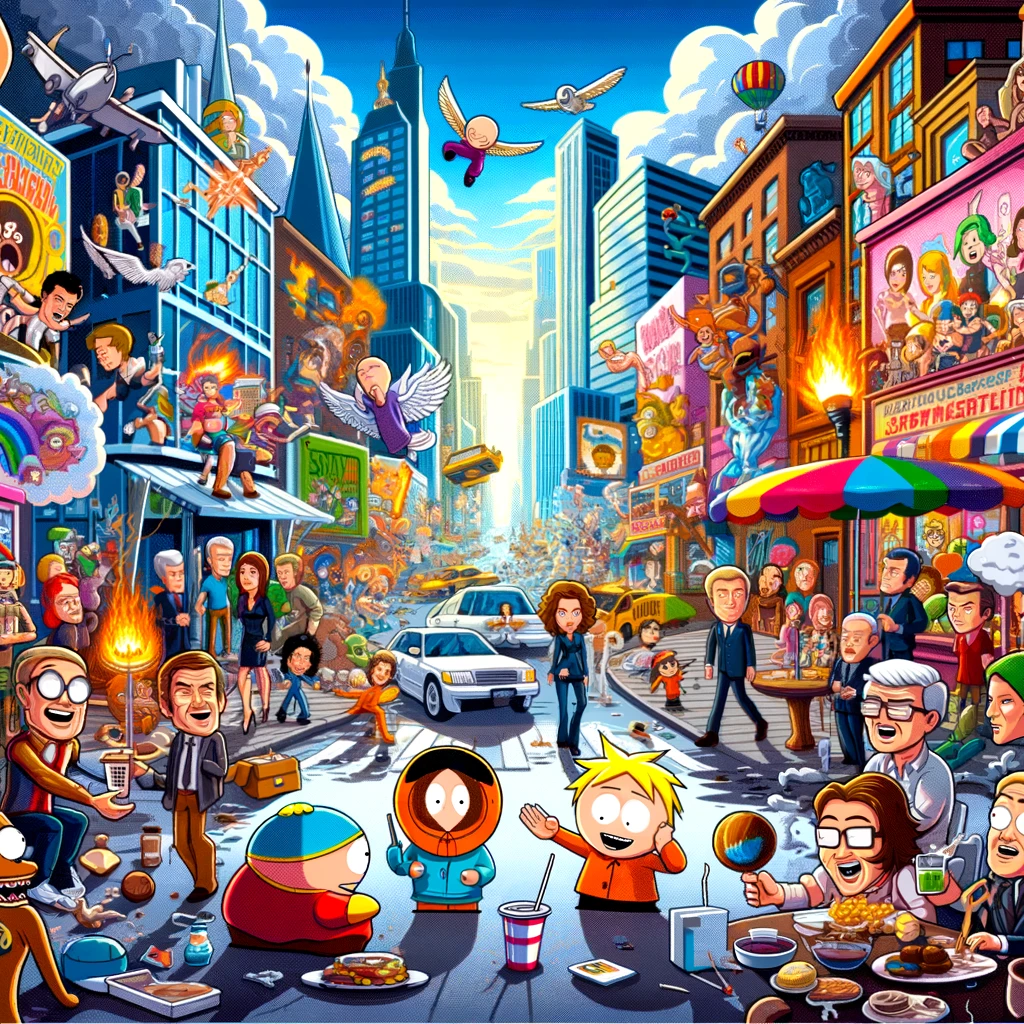
In the late 20th century, a seismic shift occurred in the world of animation, marking a departure from the perception that cartoons were exclusively for children. The advent of shows like “South Park” and “Family Guy” heralded a new era where animation transcended age boundaries, appealing to adult audiences with their unique blend of satire, social commentary, and humor. This movement wasn’t just a fleeting trend but a profound evolution in the medium that has continued to captivate viewers across the globe.
The genesis of adult-oriented cartoons can be traced back to a growing appetite for more sophisticated, edgy content that could entertain an older demographic. Adults, just as much as children, are drawn to the imaginative possibilities of animation, but they crave narratives and humor that resonate with their more complex life experiences and sensibilities. Shows like “The Simpsons” paved the way, proving that cartoons could tackle a wide array of themes—ranging from the mundane to the existential—while still engaging audiences in laughter and thought-provoking commentary.
What sets these shows apart is not just their willingness to push boundaries but their adeptness at weaving social critique and satire into their narrative fabric. “South Park,” for instance, has been lauded for its unapologetic approach to controversial topics, using its animated format to dissect societal norms and political absurdities with a sharpness that live-action shows might struggle to achieve without backlash. Similarly, “Family Guy” employs its cutaway gags and non-sequitur humor to comment on cultural and historical phenomena, embedding critique within its comedic framework.
The success and endurance of adult cartoons also lie in their ability to evolve with their audience. As societal norms and cultural landscapes shift, these shows have demonstrated remarkable agility, updating their humor and references to stay relevant. This dynamism ensures that they not only retain their original viewers but also attract new generations who find in these shows a reflection of their own societal observations and frustrations.
Moreover, the animation medium itself offers a unique form of creative freedom that is particularly conducive to the kind of boundary-pushing content these shows are known for. Animation allows creators to bring to life scenarios and characters that would be impossible or prohibitively expensive to achieve with live actors and physical sets. This liberates writers and animators to explore the limits of their imagination, creating worlds that are at once fantastical and eerily reflective of our own.
The cultural impact of adult cartoons is undeniable. They have become a staple of modern entertainment, influencing not just television but also online content and cinema. Their ability to blend humor with critique, to entertain while questioning, has established them as a significant art form in their own right, one that challenges the notion of what animation can and should be.
As we look to the future, the landscape of adult cartoons is set to expand further, fueled by the proliferation of streaming platforms and a growing recognition of animation’s versatility. With each new show, the genre continues to redefine itself, promising more innovative, thought-provoking, and laugh-out-loud content for audiences who have come to cherish these animated windows into the adult psyche.