

Stonehenge: A Timeless Monument to Humanity’s Ancient Mysteries
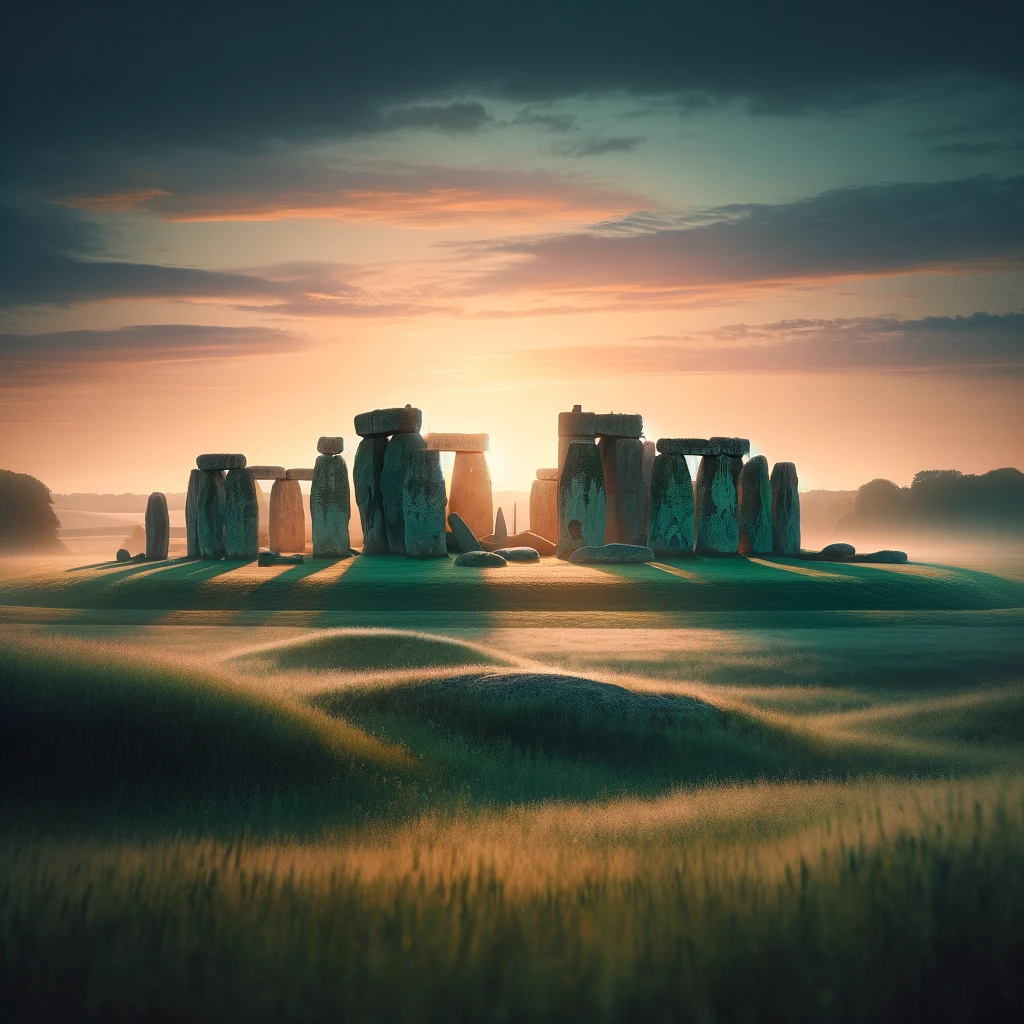
Nestled in the heart of the English countryside, Stonehenge remains one of the world’s most enigmatic and fascinating monuments. Its origins, dating back over 5,000 years, have captivated historians, archaeologists, and visitors alike, offering a tantalizing glimpse into humanity’s distant past. This ancient structure, with its massive sarsen stones and smaller bluestones, has stood the test of time, weathering the elements and the shifts of human history. It is a testament to the ingenuity and determination of its creators, whose reasons for erecting such a monument remain the subject of speculation and debate.
The construction of Stonehenge is believed to have occurred in several stages, starting in the Neolithic era around 3000 BCE. Initially, the site may have begun as a simple earthwork enclosure, where prehistoric people buried their dead. As centuries passed, the structure evolved, with the iconic stone circles being erected between approximately 2500 and 2200 BCE. These stones, some weighing as much as 25 tons, were transported from distances as far away as 150 miles, a feat that underscores the monumental effort involved in its creation.
The purpose of Stonehenge has been a topic of much conjecture. Over the years, theories have ranged from it being a temple for worshipping ancient earth deities to a celestial observatory for marking significant solar and lunar events. Indeed, its alignment with the summer solstice sunrise and winter solstice sunset lends credence to the latter theory, suggesting that those who built Stonehenge had a sophisticated understanding of the heavens.
Archaeological excavations at Stonehenge and its surrounding landscape have shed light on the lives of the people who frequented this site. From the remains of animal bones, it is inferred that feasting and possibly seasonal gatherings were common, drawing people from across Britain. Moreover, discoveries such as the Amesbury Archer, a burial found near Stonehenge, reveal the wealth and status of some individuals during this period, suggesting that Stonehenge may have also served as a symbol of social hierarchy.
The preservation of Stonehenge and its environs has become a critical concern in recent years. Efforts to limit visitor access and the impact of nearby road traffic are ongoing challenges, as is the balance between allowing people to experience this remarkable monument and preserving it for future generations. As a UNESCO World Heritage Site, Stonehenge is recognised not only for its unique and imposing physical presence but also for the wealth of knowledge it offers about prehistoric peoples’ relationship with their landscape, their engineering skills, and their spiritual beliefs.
Stonehenge continues to hold a place in popular culture and the imagination of people around the world. Its silhouette against the sky, especially at dawn or dusk, inspires a sense of awe and a connection to those who, millennia ago, arranged these stones with purpose and precision. The monument’s enduring mystery invites contemplation and exploration, beckoning us to consider the many facets of human history and the legacies we leave behind.
In the quiet expanse of Wiltshire’s rolling hills, Stonehenge stands as a monument to human creativity, spirituality, and the unending quest for understanding. It is a bridge to our past, offering insights not only into the technological achievements and social structures of Neolithic society but also into the profound mysteries of the human experience. As we gaze upon its ancient stones, we are reminded of the enduring power of human curiosity and our perpetual drive to connect with the cosmos and with one another across the ages.


